Skip To:
- When your closet and your body stop speaking the same language
- Support can mean softness, coverage, and predictability
- Start with what you feel, not what the label says
- The pieces that tend to earn their keep
- Keeping your taste, even while your proportions shift
- A smaller, kinder closet usually works better for a while
- Outfit formulas that offer support without erasing you
- Questions that tend to come up once you actually start getting dressed
- If you want the short version
Getting dressed after pregnancy can feel oddly complicated. Your body may be different, your days may be less predictable, and clothes that used to feel automatic can suddenly require negotiation. You may want softer waistbands, easier layers, more coverage when you bend or sit, or less pressure through your middle. At the same time, you probably do not want a wardrobe that feels generic, frumpy, or disconnected from who you are.
That is really the heart of postpartum outfit support that still feels like your style. It is not just about sizing up or buying loose clothes. It is about finding pieces that give you ease, movement, and a little structure while still reflecting your taste. Sometimes that means soft support. Sometimes it means better layering. Sometimes it means letting go of a silhouette that is not working right now and keeping the details that still feel like you.
There is no single postpartum dress code, and there is no universal timeline for when old clothes should feel right again. But there are patterns that tend to help. When you understand what support actually means for your body and your day, confidence dressing postpartum gets much simpler.
When your closet and your body stop speaking the same language
Postpartum dressing is practical, but it is also emotional. A lot of people expect the hard part to be physical fit alone. In real life, the harder part can be the mismatch between how you want to present yourself and how clothes are behaving on your body today.
You might still love clean lines, monochrome outfits, feminine dresses, sharp denim, or relaxed basics. But if waistbands roll, necklines no longer feel functional, or a once-reliable pair of jeans suddenly sits in the wrong place, style starts to feel like work. That can chip away at confidence faster than most people expect.
It helps to name the issue accurately. The problem is usually not that you have lost your style after pregnancy. It is that your old shortcuts are not working the same way right now. Once you stop treating that as a personal failure, it becomes much easier to build new shortcuts that actually support real life.
Support can mean softness, coverage, and predictability

The word support gets used loosely in fashion, especially around the postpartum period. Some people mean compression. Others mean smoothing. Others mean simply feeling held together enough to leave the house without adjusting their clothes every ten minutes.
In practice, postpartum outfit support often comes down to a few quieter things: a comfortable waistband that does not dig or flip, a layer that reduces cling or chafing, a top that works for feeding or pumping if that matters to you, or a dress that still feels secure when you sit on the floor, reach overhead, or carry a baby seat. That kind of support is less about force and more about reliability.
This is also where a lot of generic advice falls apart. One person feels best in firmer hold leggings or recovery-style garments. Another finds anything tight unbearable, especially if their midsection, pelvic area, or incision site feels tender. Both experiences are normal. There is not one correct amount of structure, and there is limited universal evidence for what feels best because comfort is so personal. If a garment makes you more aware of your body in a draining way, it is probably not the right kind of support for you right now.
Start with what you feel, not what the label says
Style after pregnancy usually gets easier when you stop evaluating clothes by the number on the tag and start evaluating them by behavior. The more useful questions are simple: Does it stay in place? Can you sit, stand, bend, and lift in it without thinking? Does it pinch one area while hanging oddly everywhere else? Do you feel calmer once it is on, or more self-conscious?
A few fit details tend to matter more than the nominal size:
- Waist placement: A rise that lands above or below a sensitive area can matter more than whether the item is technically fitted.
- Waistband construction: Wide, soft waistbands usually feel better than narrow elastic that twists, rolls, or digs.
- Fabric recovery: A little stretch can help, but soft recovery matters too. Stiff fabric that only gives in one direction often feels worse over time.
- Access and coverage: If you are feeding or pumping, necklines, button fronts, and layering pieces can change how wearable a top really is.
- Length: Tops, dresses, and sweaters may need a little more length than they used to so you can move without tugging.
- Adjustability: Wrap ties, elastic backs, drawstrings, and open layers can be especially useful when your fit changes week to week.
Confidence dressing postpartum often begins the moment getting dressed stops feeling like a test you are either passing or failing.
The pieces that tend to earn their keep
Soft base layers
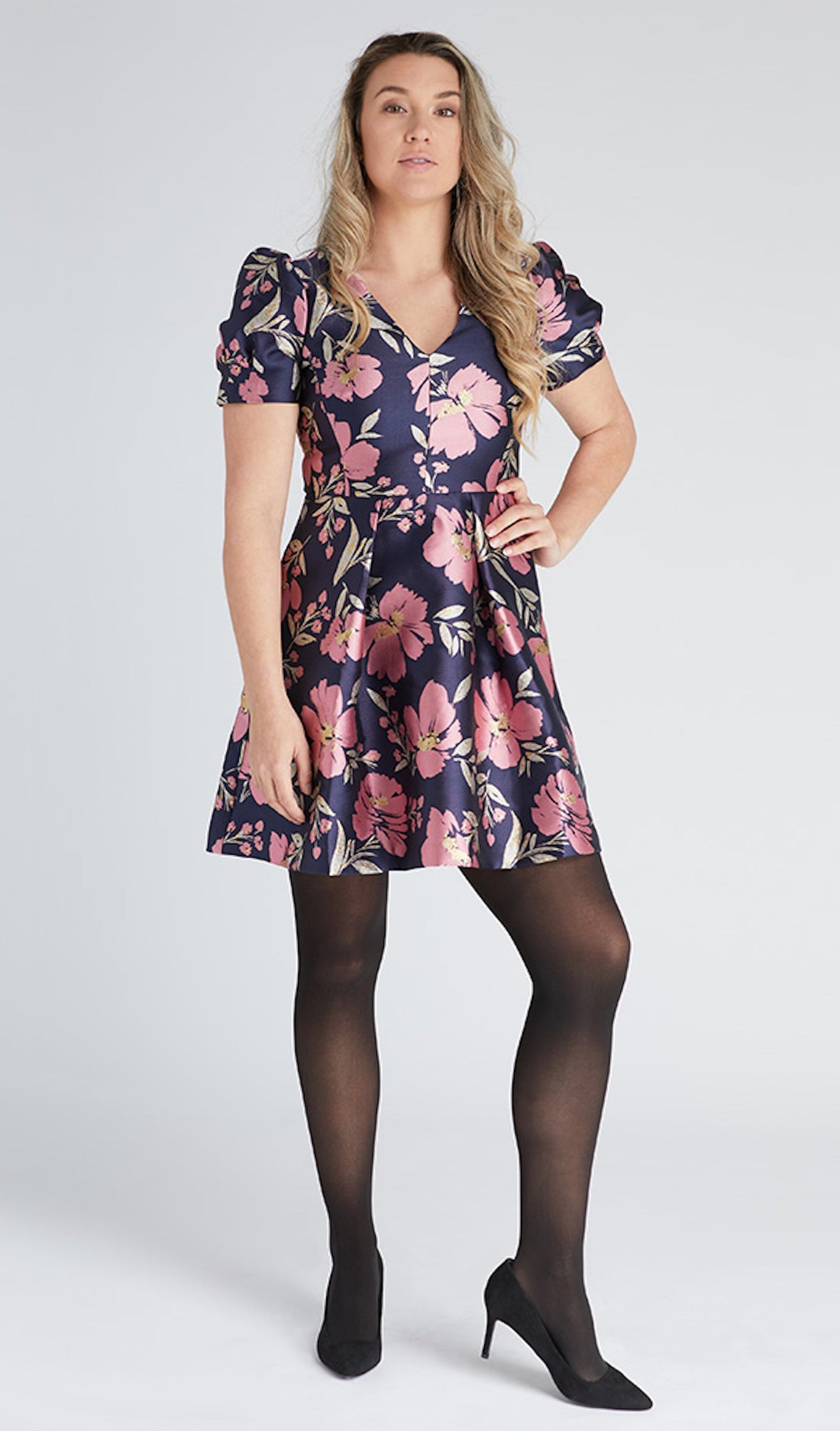
Base layers can do a surprising amount of work after pregnancy. Lightweight shorts under dresses, smoothing slips, and soft tanks can reduce friction without asking you to wear something intensely tight. They help with cling, coverage, temperature swings, and that general feeling of wanting your outfit to stay put. Another clothing item you can use under dresses are opaque or sheer tights.
If dresses, tunics, or oversized sweaters already fit your taste, a soft pair of comfortable waistband layers can make those pieces easier to wear again without adding squeeze.
Easy second layers
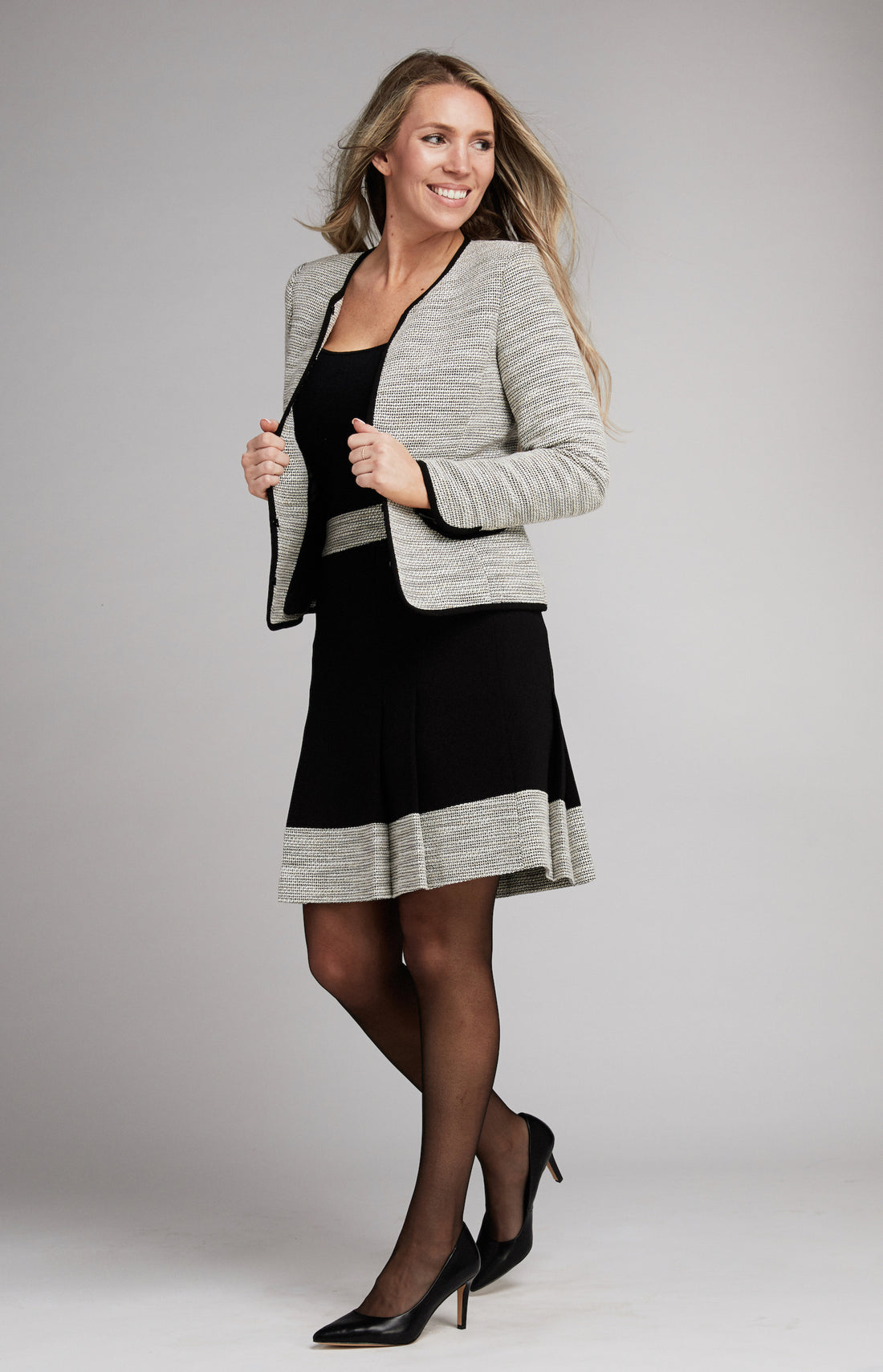
Open button-downs, cardigans, relaxed blazers, and light jackets can restore shape without demanding a precise fit through the middle. They also make basic outfits feel more finished. This matters more than it sounds like it should. When your base outfit is simple, a second layer often provides the effortless polish that helps you feel like yourself again.
Bottoms that forgive a shifting middle
Not everyone wants to live in leggings, and you do not have to. Pull-on trousers, knit pants, elastic-back pants, soft wide-leg styles, and stretch denim with a stable but gentle waistband can all work. The goal is not to avoid all structure. The goal is to choose structure that moves with you instead of arguing with you.
If jeans are still part of your style identity, try thinking about rise and fabric before size. A pair that sits beautifully at the wrong point on your body will still feel wrong, even if it technically buttons.
Dresses that do not need babysitting
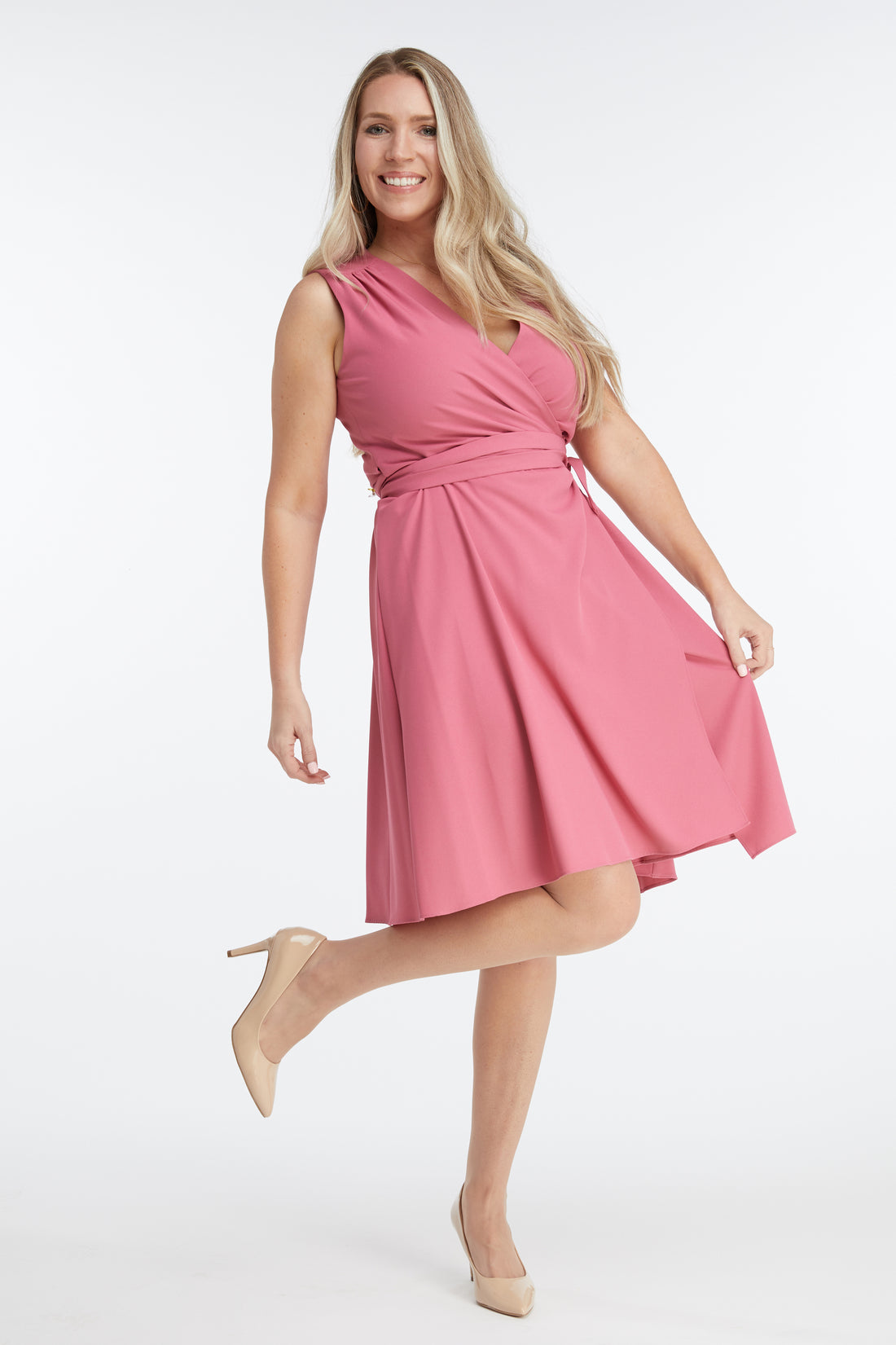
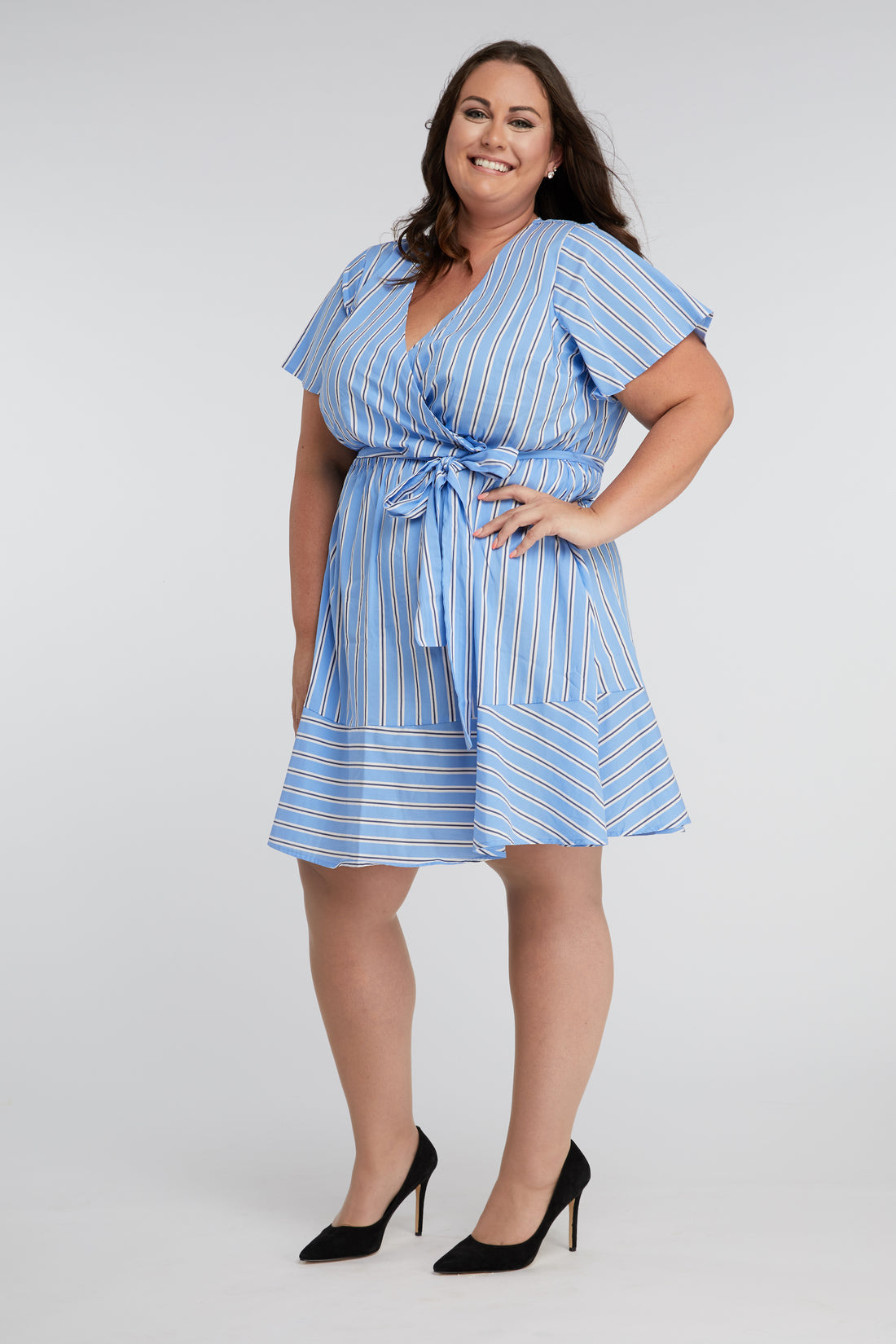
Simple midi dresses, shirt dresses, sweater dresses, and easy knit styles are often helpful because they create an outfit in one step. The best ones do not require constant pulling down, rearranging, or strategic posture. If you like a more defined look, you can get it through sleeve shape, neckline, hemline, or an outer layer instead of forcing all the definition at the waist.
Keeping your taste, even while your proportions shift

One of the biggest mistakes in postpartum outfit support is assuming comfort and personal style are separate goals. They are not. In fact, you usually feel more comfortable when you are not dressed like a stranger.
A useful trick is to identify two or three style markers that matter most to you and keep them consistent. That might be your color palette, your jewelry, the shoes you reach for, your preference for clean minimal lines, or your love of softer romantic pieces. Those details keep the outfit anchored in your taste, even if the fit is temporarily different.
This is also why style after pregnancy does not need to mean hiding in oversized everything. You can still like shape. You can still like polish. You can still prefer fitted sleeves, a tucked front, a strong shoulder, or a long lean line. The difference is that you may place definition somewhere other than the waistband for a while. That is not giving up your style. That is adapting it intelligently.
A smaller, kinder closet usually works better for a while
If your body is changing quickly, the full closet can become noisy. One practical solution is to build a smaller working rotation for the current season instead of forcing every old favorite to prove itself daily. A few comfortable bottoms, a couple of dresses, several easy tops, two layers, and shoes that work with most of it can take a lot of pressure out of the morning.
It can also help to move not-right-now pieces out of immediate view. Not because you are giving up on them, but because a closet packed with friction is exhausting. Postpartum fit can shift for many reasons, and there is no reliable schedule for when certain items will feel normal again. Buying or dressing for the body you have today is usually kinder than dressing for a future version of yourself on a deadline.
If you eventually find that your shape has settled and you miss particular pieces, simple alterations or updated basics may make more sense than trying to force older cuts back into the rotation unchanged.
Outfit formulas that offer support without erasing you
- Relaxed button-down + soft tank + pull-on trouser + clean sneaker: easy movement, simple access, and enough structure to feel dressed.
- Midi knit dress + lightweight short or tight underneath + cropped cardigan: comfortable, polished, and less fussy than separate pieces.
- Straight or relaxed stretch jeans + tucked tee + open blazer or shirt jacket: a good option if you want denim without building the whole outfit around it.
- Matching knit set + long coat or cardigan + low-profile shoe: minimal effort, strong line, very wearable on tired days.
- Column skirt + soft sweater + opaque tights: helpful when you want shape and coverage without a rigid waistband.
These formulas work because they do more than look good. They reduce decisions. And when you are rebuilding confidence dressing postpartum, reduced friction matters.
Questions that tend to come up once you actually start getting dressed

Do I need to avoid fitted clothes completely?
No. A fitted sleeve, a neat shoulder, or a straight skirt can feel great. The more important question is where the garment is fitted and whether that placement feels supportive or restrictive on your body right now.
What if my size changes from week to week?
That is exactly when adjustable pieces earn their keep. Elastic backs, soft knits, open layers, and forgiving rises tend to be more useful than items that only fit on a very specific day.
Is compression the same thing as support?
Not always. Compression is one form of support, but plenty of postpartum outfit support is gentler than that. A smooth base layer, a no-dig waistband, or a dress that stays put can be supportive without feeling firm.
How do I dress for feeding or pumping without looking too casual?
Think in layers. A simple base that offers easy access with a polished outer layer often looks more intentional than searching for one top that does everything.
What if waistbands bother me right now?
Try changing the landing point before you give up on a whole category. A different rise, softer elastic, wider band, or dress-based outfit may solve the problem faster than chasing a smaller or larger size.
Can I still wear jeans, or is that unrealistic for a while?
You absolutely can if they feel good. The trick is to be picky about fabric, rise, and waistband comfort instead of assuming all jeans will feel the same because they share a size label.
How do I stop buying placeholder clothes I never really like?
Keep your style markers visible when you shop. If a piece is comfortable but has none of the colors, proportions, or details you normally enjoy, it may solve a fit problem while creating an identity problem.
When does your old style usually start feeling normal again?
There is no clean deadline. For some people it is quick. For others it is gradual and uneven. It often helps to think less about returning to an old version and more about building a version of your style that fits this season of life well.
If you want the short version
- Postpartum outfit support is not just about compression. It can mean softness, coverage, easy movement, and clothes that stay put.
- Evaluate clothes by how they behave on your body, not just by the number on the tag.
- Base layers, easy second layers, forgiving bottoms, and low-fuss dresses usually do the most work.
- You do not need to abandon your taste. Keep your colors, accessories, proportions, and favorite style cues even while fit changes.
- A small current rotation is often more useful than fighting your entire pre-pregnancy closet.
- The best style after pregnancy is the one that lets you feel comfortable, recognizable, and a little less interrupted all day.
The goal is not to dress like your pre-pregnancy self on command. It is to build outfits that support the body you have now and still feel recognizably yours. Once your clothes stop demanding so much attention, confidence has a way of returning quietly.